Wheels vs Tracks: Why Ukrainian Ground Drone Developers Prefer Wheeled Platforms
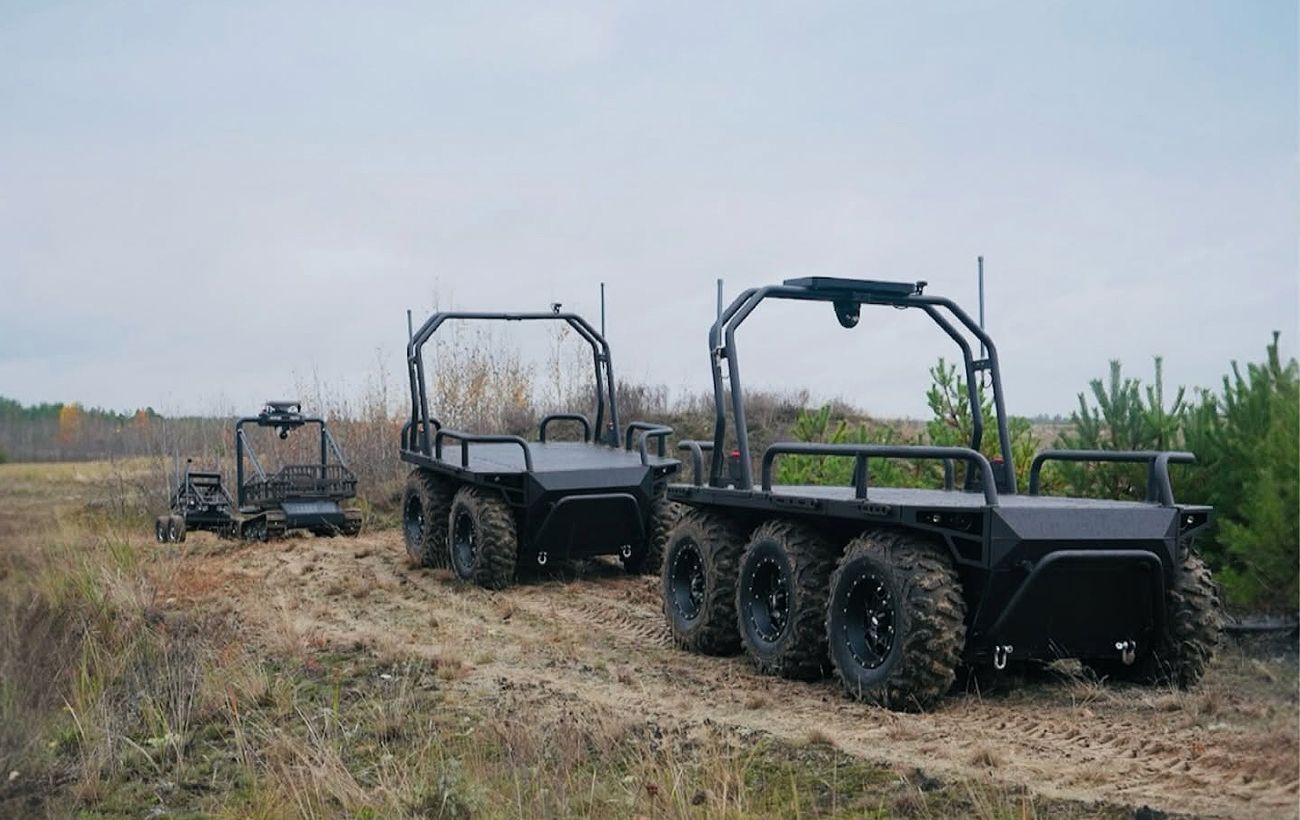
Producers of unmanned ground vehicles (UGVs) in Ukraine strongly favor wheeled platforms due to their production simplicity and ease of maintenance. Only 7% of engineering teams focus on tracked systems.
 🧠AI Analysis
Photo: RBC-Ukraine
Key points
- Over 90% of UGV development teams choose wheeled platforms over tracked ones.
- Only 7% of engineering teams focus on tracked ground drones.
- TechUnity's AetherLink GS v1.2.0 features AI-driven road retention and FPV drone detection.
The rapid development of the unmanned ground vehicle (UGV) market in Ukraine is becoming an essential aspect of modern combat operations. The choice between wheeled and tracked chassis depends on mission requirements, terrain, payload, and operating conditions. However, wheeled platforms currently dominate the market among both military units and developers.
According to the CEO of TechUnity, only about 7% of teams working on UGVs produce or develop tracked platforms, a ratio that has remained constant. The primary advantages of wheeled systems include simpler manufacturing and maintenance, lower rolling resistance on solid ground, and higher speeds. Furthermore, a wheeled platform can often keep moving even after damaging one wheel, whereas losing a track typically leads to a complete stop.
Technical Nuances and Software Innovations
At the same time, tracked vehicles offer superior traction on soft soil, mud, sand, or snow due to a larger contact surface area. However, the complex tracked chassis demands significantly more maintenance and wears out faster. Industry experts note that manufacturers who succeed with tracked UGVs easily add wheeled models to their lineup, while the reverse process requires much greater engineering effort.
Alongside physical hardware, developers are integrating smart software solutions. For instance, TechUnity recently highlighted its control station, AetherLink GS version 1.2.0. The software features artificial intelligence tools, including road retention and automatic detection of incoming drones, including FPV models.
The advancement of domestic robotic platforms aims to minimize personnel exposure in dangerous zones by delegating logistics, evacuation, and reconnaissance to autonomous systems.
Source RBC-Ukraine — rbc.ua/ukr/news/kolesa-peremagayut-ki-nrk-koristuyutsya-bilshim-179… ↗
Read next
 ⚽Sport
Oleksandr Usyk tries basketball in London and challenges NBA legend to a boxing match
Ukrainian boxer Oleksandr Usyk participated in a charity basketball event in London, sharing the court with NBA legend Scottie Pippen.
 🏛️Politics
Constitutional Court of Ukraine on the Brink of Losing Quorum as Judge Count Falls
The Constitutional Court of Ukraine is left with only 12 judges, barely meeting the minimum quorum for the Grand Chamber, while the Second Senate has lost its operational…
 💼Economy
EU Court Bans Sales of Chinese BYD SUV Due to Resemblance to Land Rover Defender
The District Court of The Hague has ruled in favor of Jaguar Land Rover, banning Chinese automaker BYD from importing, producing, and selling the Ti7 SUV within the Europ…
 🛡️Security
Primary school teacher Maryna Moichenko killed in Russian drone strike near Kyiv
A 36-year-old primary school teacher, Maryna Moichenko, was killed in a drone strike on a grocery store in Vyshнеve, leaving behind two daughters.
 🛡️Security
Air Assault Forces Deny Russian Claims of Remote Mining in Rylsk
Explosions in the center of Rylsk, Russia, resulted from the detonation of an enemy ammunition depot rather than remote drone mining, Ukrainian military report.
 🚨Events
Lviv Resident Faces Trial for Attempting to Smuggle Drugs into Penitentiary Facility
The Lviv District Prosecutor's Office has forwarded an indictment against a 61-year-old local woman who tried to send cannabis hidden in clothing and food to a detention …